Fosamax Medication - how long
Fosamax medication - how long will I need to take this drug for my Osteoporosis? "How long?" is one of the most frequently asked questions raised by those taking this drug for Osteoporosis.
Will one year long enough? Will I need it for 2 or 3 years...or longer?
One woman who had been taking this medication for over 4 years began to wonder if she would ever stop taking Fosamx medication.
The medical community has been asking this same question almost from the beginning. And as some serious side effects (Osteonecrosis) began to show up in persons taking the drug, the question of 'how long' became even more insistent.
There are
studies showing good results of increased bone density with this drug.
But some question whether over the long term if these increases are sufficient since with Fosamax (and all the drugs called bisphosophontes ) the increased bone density is due to the drug slowing the
activity of Osteoclasts, the cells that remove old bone. This 'old bone' would normally be removed by the body because it is weaker that regular bone. Because of this many believe that the
increased bone density that shows on a dexa scan is really an increase in 'compromised bone' and may not be something that will prevent a fracture.
What do researchers say about long term use of Fosamax medication?
As early as 2006, the Journal of the American Medical Association published a study about this issue.
The study opens: "In the 10 years since the first results from the Fracture Intervention
Trial (FIT) were published, it has been relatively straightforward to
know when to start bisphosphonate therapy for women with postmenopausal
osteoporosis1, 2. The trick has been knowing when to stop. . .
Previous clinical studies showed that up to 10 years of alendronate was associated with sustained gains in bone mineral density (BMD) and did not appear to be harmful,5 somewhat diminishing the concern that long-term suppression of bone turnover could lead to an accumulation of micro-fractures and diminished bone strength6. However, these long-term data included fractures only as a safety endpoint. The best we could advise women tired of their complicated bisphosphonate regimen or concerned about the highly-publicized risk of osteonecrosis of the jaw was that the risks of continued treatment were small."
The article then reported a more extended study of these same women in which some received Fosamax medication for another 5 years while others received only a placebo.
Investigators showed that women who switched to placebo after 5 years of alendronate (Fosamx medication) lost a statistically significant, but clinically small 2–3% more bone density than those who continued alendronate for a full 10 years.
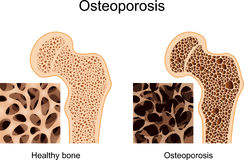
Both groups remained well above their FIT baseline femoral neck, trochanter, and lumbar spine BMD. Similar to previous long-term bisphosphonate trials, there was no excess of adverse events in the 10 year treatment group, and no cases of osteonecrosis of the jaw.
What of fractures? (The real reason we treat Osteoporosis at all is to prevent fractures.) The authors reported that:
Despite the small difference in BMD between the groups, there was no excess in all clinical fractures or morphometrically detected vertebral fractures in those women who stopped therapy after 5 years.
There was a significant 2.9% absolute risk increase in clinically detected vertebral fractures in the placebo group, indicating that 34 women would need to be treated for an additional 5 years to prevent 1 clinically apparent vertebral fracture.
NOTE: The trial was powered to detect bone density changes rather than fractures, and the authors calculated post-hoc that they had 80% power to detect a relative risk reduction of 13.5 to 33%. Thus, a 6% absolute risk increase in all clinical fractures could have occurred without detection.
Conclusions: The study of Fosamax medication went on to say:
"This trial has several important clinical implications. First, women who have a good response to 5 years of bisphosphonate therapy (3–5% increase in hip BMD, 8–10% increase in spine BMD, T score >-3.5) and are not otherwise at increased risk for vertebral fracture can consider a “holiday” period of up to 5 years off therapy. This strategy would clearly improve the already attractive cost-effectiveness of bisphosphonates.8, 9 However, the importance of careful BMD monitoring will increase in such women; those rapidly losing BMD (in FLEX the thresholds were >8% in 1 year, >10% in 2 years, or >5% from baseline) will likely require resumption of bisphosphonate therapy or a switch to an alternative agent."
Still there are other reports about Fosamx medication that are more cautionary.
As noted on Drug Watch women using Fosamx medication have reported fractures of their thighbone as well as 'jawbone death.'
In 2004 the FDA concluded that long-term Fosamax medication use was conclusively linked to osteonecrosis of the jaw.
In 2008, the FDA warned that bisphosphonates were also linked to debilitating bone, muscle and joint pain.
In 2009, a study in the New England Journal of Medicine linked long-term Fosamax medication use to esophageal cancer.
In 2010, the FDA required that Fosamax and other bisphosphontes to include warning labels about the increase risk of thighbone fractures.
In 2011, the FDA added a new
warning label stating that the optimal duration of
Fosamax use has not been determined. An FDA advisory committee wants to limit the duration any patient could use the drug, - but it appears the group can’t agree on what that time limit should be.
Finally medical researchers are making clear connections between Fosamx medication and irregular heartbeat and eye disorders that cause inflammation and distorted vision.
Source: Fosamax medication at Drug Watch
What to do......
I am a researcher, not a licensed medical provider and so I can not give you medical advice of any kind. I do feel that I can say that if my health care provider gave me a prescription for Fosamax, I would ask for a special consultation.
I would raise the issues found in these studies. There are other studies too. If you go to http://www.ncbi.nlm.nih.gov/pmc/ and type the words: Fosamax side effects into the search box, you will get summaries and links to many scientific studies on the topic.
Did you know that there are dozens of effective natural treatments for bone loss? To read click on Natural Treatments Bone Loss
Search this site

Recent Articles


-
Does taking calcium help osteopenia
Apr 12, 24 06:45 PM
Does taking calcium help osteopenia, what does the research say -
Aclasta information | Osteoporosis infusion | Zoledronic acid
Jan 20, 24 05:46 PM
Aclasta information: Osteoporosis research, benefits, side effects of Alclasta (Reclast) Osteoporosis drug -
Abaloparatide Thymos 0steoporosis medication reduces fracture risk
Nov 07, 23 01:08 PM
 Abaloparatide Thymos 0steoporosis medication treatment increased bone mass, density, strength & restored bone micro architecture. increased bone strength.