Men Osteoporosis estrogen
Men Osteoporosis estrogen? Estrogen? You may be thinking, I understand studying testosterone in men but estrogen? The answer is, Yes. Estrogen is important for men too.
In the 2000 a study was submitted to the Clinical Investigations journal titled: "Relative contributions of testosterone and estrogen in regulating bone resorption and formation in normal elderly men". The article was published in the December 15th issue of the journal. .
"Relative contributions of testosterone and estrogen in regulating bone resorption and formation in normal elderly men" was authored by Alireza Falahati-Nini, B. Lawrence Riggs, Elizabeth J. Atkinson, W. Michael O’Fallon, Richard Eastell, and Sundeep Khosla1.
All these scientists work at significant insittutions: the Endrocrine Research Unit, and Department of Biostatistics, Mayo Clinic and Mayo Foundation, Rochester, Minnesota, USA and Division of Clinical Sciences, Northern General Hospital, Sheffield, United Kingdom.
Summary of the Men Osteoporosis Estrogen
The abstract tells us that the following was the basis for this study about Men Osteoporosis:
1. The researchers hypothesized that maybe estrogen regulates bone turnover in men as well as in women. Why? It is known that young adult males who cannot produce or respond to estrogen are osteopenic.
2. The researchers noted that it is unclear whether a lack of estrogen or a lack of testosterone is the more important fact that leads to Osteopenia and Osteoporosis. Why? The researchers remind us that it is known that the bioavailablity of both estrogen and testosterone decrease substantially in aging men!
To quote the authors directly:
"Thus, we addressed this issue directly by eliminating endogenous T (testosterone) and E (estrogen) production in 59 elderly men (mean age 68 years), studying them first under conditions of physiologic T (testosterone) and E (estrogen) replacement and then assessing the impact on bone turnover of withdrawing both T (testosterone) and E (estrogen), withdrawing only T (testosterone) , or only E (estrogen), or continuing both. Bone resorption markers increased significantly in the absence of both hormones and were unchanged in men receiving both hormones. By two-factor ANOVA, E (estrogen) played the major role in preventing the increase in the bone resorption markers, whereas T (testosterone) had no significant effect. By contrast, serum osteocalcin, a bone formation marker, decreased in the absence of both hormones, and both E (estrogen) and T (testosterone) maintained osteocalcin levels."
The conclusions drawn from the study of Men Osteoporosis were that:
E (estrogen) is the dominant sex
steroid regulating bone resorption, whereas both E 9estrogen) and
T(testosterone) are important in maintaining bone formation.
This is astounding! Few males ever think of estrogen's place in their bone building.
Implications of this study:
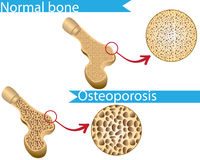
This is an important study about Men and Osteoporosis. It certainly offers some explanation as to why FOSAMX, a Bisphosphonate that reduces bone resorption by impairing osteoclast cells, has proved to be successful in treating male osteoporosis as well as female osteoporosis. But this study from 2000 may also offer us some new directions for men wanting to increase the formation of new bone.
While estrogen replacement therapy has had some mixed reviews when used with menopausal and postmenopausal women, I know of no studies about its use with older men.
Also, the alternative medicine practitioners suggest a number of ways for increasing estrogen levels in women. The use of these things with men seems undocumented. But if increased estrogen levels in men are associated with greater bone formation, this may prove to be a line for additional research.
To read the abstract of this article and get a list of others studies which reference it, go to: Men Osteoporosis or to read the full text of the articles go to Men Osteoporosis estrogen Testosterone
Natural ways to increase bone density
There are so many ways to increase your bone density. The first thing you need to do is find ALL the reasons why you have bone loss. Suggestion: Read to the CAUSES of Osteopenia, Osteoporosis page
After you have made a list of ALL the possible causes for your bone loss, then go to the Ways to Increase Bone Density and find those things that address your particular causes.
End of article: Men Osteoporosis Estrogen.
Search this site

Recent Articles


-
When to treat Osteopenia
Jun 09, 25 12:20 PM
When to treat Osteopenia. Suggestions about timing for natural and pharmaceutical treatments -
Does taking calcium help osteopenia
Apr 12, 24 06:45 PM
Does taking calcium help osteopenia, what does the research say -
Aclasta information | Osteoporosis infusion | Zoledronic acid
Jan 20, 24 05:46 PM
Aclasta information: Osteoporosis research, benefits, side effects of Alclasta (Reclast) Osteoporosis drug